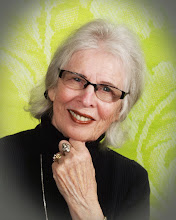
Welcome to my Blog

Thursday, March 6, 2014

 A.B. Curtiss writes for EZArticles. Her latest article: "How Nobody's Park Became Mine" is now online.

How Nobody's Park Became Mine
By A.B. Curtiss
There is a little tri-corner piece of property, probably less than a quarter acre, nestled among my house and three others. I walk by it every morning and watch it fill up with weeds. The owner hasn't lived in his house for maybe 15 years. Once or twice a year he sends a yard man to clean up the little park. But the weed cycle soon takes over again.
Click Continue to read the full article.


Monday, March 3, 2014

Why Your Psychotherapy May not be Working


        There is a huge unrecognized problem with psychotherapy today. Neither the therapist nor the patient grasp the fact that most of what occurs during their sessions is that the patient is trying to go back and "fix" their history or at least be paid for it.
        The patient is still angry and hurt about being shortchanged by earlier abandonment or abuse, and they want to be reimbursed. Wants justice. Wants recognition for the pain. Wants the therapist to blame the abuser, or the terrible circumstances of the past, and take any blame away from the patient for failing in their own present life.
        Why does this happen? We all avoid dealing with our own repressed fear and pain, which is extremely painful by blaming. Which is why therapy takes so many years.
        The patient is still using the process of blame to avoid seeing their fear, and being able to address their fear, so they can make more positive behavior choices. So the "other causes" and "life history" start to seem more important and powerful than "the patient" and his effort at making something out of his regular day. When the past becomes more important than the present, you can't live in the NOW.
        In most psychotherapy, therapist and the patient both believe the patient is trying to fix her daily life. But if that were true, they would not need to go over and over and over the patient's past background. Child abuse or bullying of any kind has nothing to do with adult choices except that it is easier to fall into habitual use of old negative habit patterns than to form new positive patterns of behavior.
        One of the worst things for a therapist to do is have their patient constantly "pillow-bashing" their former abuser. In order words, having the patient express their anger in acting out in symbolic aggression against the abuser. This is a waste of time. This old fear and anger (fear focused outside oneself) should be brought up, fully acknowledged and accepted rather than bypassed by acting it out. By acceptance, I mean allowed to finish by being recognized and felt deeply by the patient.
        The scientific fact is that old poor behavior patterns have no power to limit one's use of good behavior patterns. This includes former crazy behavior as well, which is not often thought of as a choice. Once we realize this fact, then we can simply put all our energy into practicing new thinking and behavior patterns, until the new patterns become dominant over the old poor thinking and behavior patterns.
        The old thinking and behavior patterns will still exist in the memory banks but as new ones take precedence, the old ones cease to be used as often. This is due to the brain's plasticity. The brain creates new neural patterns as a result of new behavior and new thinking. These new neural patterns can be used instead of the old ones. It is the patient's choice which patterns to use.
        But this seems too simple. Most people prefer the "therapy" for fixing their life to be complicated so that there is more excuse for lack of success. Why would we want lack of success? It is human nature to settle for the old ways, the known, even if it's miserable, than to risk the new. As the old phrase goes "better the Devil we know than the Devil we don't know."
        The new positive behavior choices generally involve dealing with your fear. Repressed fears are extremely painful. The more you are willing to risk addressing your fear, the less need you have for excuses, and the more you will use your energy to take the simple road of applying new and better behavior and thinking patterns, and therefore making yourself a better brain to insure yourself a better life.
        The funny thing is that you could write yourself any kind of life-story history, and substitute it for your real background, and take it to a therapist, and the change would have no effect on your therapy. The only difference is that your real history EXPLAINS your fear. But you don't need your fear explained. You just need to address your fear so that it can finish, and you can move on to make something of your day.

http://www.abcurtiss.com

A. B. Curtiss is a board-certified cognitive behavioral therapist, diplomat of the board--psychology, certified hypnotist, author of 12 books, and the creator of brainswitching, a system of mind exercises to get out of depression. Her books have been translated in 5 languages including Japanese and Russian.


Thursday, February 13, 2014

Are you Suffering from Depression or PTSD--You Need to Know the Difference

Dear Mrs. Curtiss,  


 I read your book "Depression is a Choice" about 10 years ago because I was concerned about my son. Since being  in his 30's, he has been through pills,  combinations of pills,  and also ECT. The best thing about ECT is that he had to go off all meds. Well I knew, and he knew, after 12 ECT treatments that was also was not working. He never went back on meds,  and just rode through the depressions, waiting for relief and normalcy.

My son is now in his late 40s, owns his own company and works every day.  There are many days he cannot concentrate and feels hopeless but he has employees and he can, as he explains to us, hang at his desk looking busy.  I have read so often that depressed people end up not working.  He is a good athlete, plays racquet ball, golfs all summer. He knows he feels better with exercise so he makes himself go,  this is good.  But when the depression hits like a thief in the night and roams around for weeks...  you know the rest.

Well, the depression has been markedly worse and seemingly more frequent for the last 2 years.   I have just finished reading your book "Brain Switch".  Your explanation of the human brain in layman words as it pertains to depression is wonderful and I am so very grateful. The reason I am writing to you is I think my son would do well with a counselor for accountability and encouragement from some one WHO HAS BEEN THERE. 

In the past psychiatrists have been a great disappointment, so he is weary and leery of that approach.  I have not found a counselor WHO IS ON YOUR PAGE.   I trust with confidence someone who has been there, fought the battle, understands the pain and miracles of miracles through trial, studying the brain, etc.and writes a book to give others the hope and chance to live a normal life. 

My question, if Patrick came to California for an interview, would you consider counseling over the phone for a period of time?  Or can you recommend someone in my area who believes and follows your approach of direct thing  to treating  depression.  Thank you for your work.


Most sincerely, M

Dear M,

You said you read both books. How about your son? Has he read them?

I find that people who go to psychiatrists, in general, are unwittingly taught to take a dependent position as it concerns the state of their own psychological health. Even if someone is very independent in the social or business world, they may be taking a back seat to the workings of their own mind, almost as if it's none of their business and it is, instead, the business of the doctor to study and fix it. 

Most depressed people believe that their depression is being visited upon them through no fault of their own and therefore they believe there is nothing they can do, themselves, to alleviate the situation. What both of my books do for this situation is to give people some ideas, exercises and new ways of thinking which, if followed, can rid them of the learned and habitual behaviors which lead to and prolong depression. Strengthened by this knowledge and intimate personal study of their own behavior,  people have a wider, more inclusive picture of the structure of their depression. Therefore, instead of constantly looking for someone else to give them "the answer," "to fix it," or "to be the one responsible" for their emotional well-being, they can now begin to take control of their own well-being.

Here's a quote from Herman Melville's Moby Dick that describes the value of mucking around in your own habitual behavior with a new sense of purpose and awareness toward the idea of studying and assessing what you have been doing that heretofore you had not as thoroughly been aware.

"Faith like a jackal feeds among the tombs and, even from these dead doubts, she gathers her most vital hope."

Now the caveat to what I have just said if this. Perhaps your son has been on a lot of medication, that has so depleted his adrenal system that his system does not have sufficient amino acids for his brain to produce enough neurotransmitters to get out of anxiety, which is the default mechanism of the human mind since it is, after all, a defense mechanism. We call this PTSD and for this I would suggest a homeopathic practitioner or a Dr. of Chinese medicine to give him a battery of blood tests and an extensive overview of his diet. 

And the book for this kind of anxiety, and oversensitization of the nerves,which is a little different from depression, is by Dr. Claire Weekes and called Hope and Help for Your Nerves. I read this book three times when I myself had PTSD due to an overdose of oxycodone that the doctor prescribed for a back injury. It takes a lot of "hanging out" with Dr. Weeke's 4 simple principles which only finally come clear to you with the practice of applying them. As with a lot in my books, an intellectual understanding of what I am suggesting is not sufficient. The depressed person must take some action, must start putting into practice the principles before they will "get them to the core." It took me four months of nutritional help and "hanging out" with Weeke's book but, finally, I was completely cured and in the several years since, PTSD has not returned.

If your son is unsure which is his situation, he can do a couple of things.

Have a thorough battery of blood tests and examination by a good nutritionist or homeopathic practitioner.

He can also read my two books, study some of the relevant correspondence on my blog, and put into practice a few simple ideas which can help him rid himself of many of the behaviors of depression, so he can then see what is left of his discomfort to better assess from which he is suffering, depression or PTSD.

It all might take an initial investment in time but then you are cured for a lifetime. I suffered for 30 years with depression but not for the last 30 years. Yes, I have normal ups and downs like everybody but the downs are short-lived and don't have a chance to escalate into what's known as depression.

If your son begins to take a more active view of his situation, I would be glad to talk to him by phone. I would not charge for it. And, as always I answer anyone's email and I don't charge for any of it either.

Hope this helps.  A. B. Curtiss


Friday, January 24, 2014

A Small Victory in Nobody's Park


There is a little tri-corner piece of property, probably less than a quarter acre, nestled among my house and three others. I walk by it every morning and watch it fill up with weeds. The owner hasn't lived in this house for maybe 15 years. Once or twice a year he sends a yard man to clean up the little park. But the weed cycle soon takes over again.

I have been particularly offended by the nasty little round black sticker weeds that peppered my clothes. They were the devil to brush off. So I decided to weed them myself when the flowers were still in bloom, before the beastly little stickers formed. It only took  two years to get rid of them. I found that a wonderful thing. Almost magical. Why had I put up with the stickers for ten years? Not my property, I guess was the reason. I'm not supposed to take care of it.

Which reminds me of a big fight my children had many years ago over a small flower garden I had made for them in our front yard. Each child wanted "my own garden." I don't remember if I convinced them or not but I do recall telling them that "this garden belongs to anyone who works in it." Perhaps I only convinced myself.

Anyway, back to my neighbor's park. After the stickers, the next arrival on the weed scene were thistles. Beautiful purple at first, their prickly leaves hurt. They ultimately produced a burst of seed fluff that sowed little thistle seeds all over my yard. It took me four years to get rid of the thistles in my own yard. So I finally made war on the thistles.in the little park so they wouldn't infect my property That took me another four years. Although, to be truthful, the last years only produced one or two stalwart stragglers that had evaded my murderous hand. Or glove, as you couldn't touch the spiny leaves with your bare hand.
.
But I never even considered tackling the wild mustard that grew in thick and healthy after the winter rains started. Oh, I made a stab at pulling out the biggest plants nearest my own unmustarded part of the yard, when the ground was damp and it was easy. But it was discouraging—there were so many. And the hill on the side near the owner was too steep to stand on. Mustard, mustard everywhere. It couldn't be helped. I didn't have the time. After all, I had wild mustard in my own field that I still struggled with, pushing them back a few yards each year.

But all of a sudden, for some unknown reason, last month my weeder's eyes gleamed ominously at the helpless wild mustard seedlings covering the dark earth like a green
5 o'clock stubble. Yes, it was daunting. But, heck, it wasn't like my four acres, it was just a little park. Maybe I could just hoe the now fragile green nasties for ten or fifteen minutes every morning. Heck, I could always quit, couldn't I?

But I didn't quit. After three weeks there was only a small patch of green left. Hooray, I thought, I could finish it today!! I called my next-door neighbor whom I thought might be the only one at all interested in celebrating with me my humble victory.

"Do you have five minutes to spare," I asked. I want to show you my progress on the little park. It's hard to believe but I think I've almost done away with all the wild mustard. I want you to bear witness to the last green patch."

Alas!  All she said was "could I make it another day?”  Her hair was up in curlers and she was busy washing windows. She's the older generation like me. We're the generation that still washes our own windows. We do it slow, a few at a time. Such menial "woman's work" hasn't been yet been gentrified out of our blood.

"Are you going to plant some wild flowers," she suggested. I was surprised at that. I had some wild flower seeds but they were expensive and such a few came in the little $4 packet. Although I did have some left over from a large project after the 2007 fire.

"I hadn't thought of that," I answered. "I don't think they'll grow without being watered but I happen to have some so I'll throw a few down and see how they do."

But I couldn't wait for “another day” as rain was predicted in two days and I needed at least one day to look for stragglers and throw down some wild flower seeds. So alone and unheralded I raised my hoe in salute, threw down some wildflower seeds and congratulated myself. It wasn't like I'd won the Nobel prize. But still, it felt pretty good as I leaned on the hoe and surveyed “my park.”


Monday, December 9, 2013

Your cbt Exercises have Worked Well for my Depression

Ms. Curtiss,

I have been implementing your cbt techniques in my goal of eliminating depression without drugs now for a few weeks. I have been primarily doing the 'yes' exercise and my own personal version of 'green frog' with great success.

I was wondering if you had any ideas on cbt work for the extinction of addictive behaviors, especially in those moments when the desire becomes overwhelming.

My reason for asking is that your methods in depression are for exactly those times when the depression is coming on.

Thanks for your help, J


Dear J

Congratulations on your success with managing depressing. It is very freeing when you finally understand that no one is coming to save you and you simply have to save yourself. Not only that but you find you have the wherewithal to do it once you begin to take charge of your own life. 

As to your question. Addictive behaviors are similar to phobias in that both of them allow us to avoid the pain of feeling the repressed fear usually left over from childhood traumas of various kinds, avoid the pain of handling some difficulty in present reality or avoiding facing some real fear by focusing on a less threatening phobia. Instead of facing the fear of something real, we can always distract ourselves with the acting out of some bizarre motion or fearing something “odd.”

Acting out on feelings relieves us from having to feel the pain of them. We focus our awareness on the bizarre activity instead of the extreme pain caused by the irrational fear. The same thing is true here as is true of overcoming the fear of depression coming down on us. Once we realize that we need to access our courage and face old repressed fears (I talk about how to do this in Depression is a Choice Chapter ten) we can easily do it. The first time we “stand our ground” and refuse to do the addictive behavior or fear the oddity and instead feel the fear that caused it, it will seem like we are dying, the pain is so terrible to feel. But it’s not really us that is dying, but the fear. Remember that fear is necessary as it is our only psychological defense mechanism. We don’t discard old fears lightly. But with practice it becomes quite easy.

The exercises for finishing old repressed fear that manifests itself in addictive behavior and phobias are a little different from those exercises we use to get out of depression. Instead of distracting ourselves from the accidently triggered neural pattern until it stops jangling, for curing addictive behaviors and phobias we have to feel the old fear until is “finishes.” It is only our fear of the pain of fear that is the problem. Once we invite the fear to come and “hang out, the pain quickly fades. If you have any more questions, don’t hesitate to ask. Hope this helps. A. B.Curtiss


 te

Sunday, December 8, 2013

Depression is a Choice Changed my Life. Thank you.

Dear Mrs Curtiss,

I just wanted to drop you a note to remind you of how much of an impact your book Depression is a Choice made. It changed my life. You and I corresponded through email about the technique of using a mantra for climbing out of depression. This technique worked extremely well and still after 10 years I am free of depression. I believe that I could not have succeeded with sanity without your advice and book.

At the time we corresponded you said that you were working on a new book on sanity. How has this work gone?

If you ever need any assistance with any matter, please let me know.

Warmest Regards, K

Hi K

So glad to hear all is well with you. I think the book to which you refer is the one I finally titled BRAINSWITCH OUT OF DEPRESSION. It came out in 2006 and won a Best Book Award that year. It  teaches you how your brain works and half the book is mind exercises and techniques to get you to start being more proactive with your thinking. A. B. Curtiss


Tuesday, November 26, 2013

And Don't Forget

I received the below response from my oldest daughter after the post yesterday about my odd habit of memorizing poetry. It's only odd, I think, in the present-day culture where, most people are interested only in quickie "tweets" or facebook glances.

A little more than a hundred years ago all American public school report cards included a grade for "declamation." I have bought several old copies of Gray's Elegy Written in a Country Churchyard which had been inscribed to some child as a reward for his "excellence in declamation." Or a Merry Christmas from some Aunt or Uncle.

I'll bet no public school child today even knows the meaning of the word declamation. And what aunt or uncle today would consider a poetry book suitable as a gift to a child? They too often settle for gift cards as presents. It's too bad. They took all the old Nursery Rhymes out of the school system as being "too violent." Are they kidding? When they have whole schools read Hunger Games and teenage books about rape and incest. These are not called violent. They are praised as "realistic, "real issues," and down-to-earth issues."

The loss of poetry is too bad. Poetry helps to organize the neurons of the brain toward logical reasoning in the same way that classical music does. Sadly there is not much classical music around, either. Nursery rhymes and elementary rhythm bands were wonderful for childhood brain development.

I hope I'm not the only one who thinks this is a deplorable situation. For without lofty and inspiring thoughts to buoy us up when we feel low, what people are now sinking into is an artificial drug high of some kind to lift their spirits. Unfortunately what these these people don't realize is that there is ultimately a price to pay for introducing these uppers into the neurons of your brain. Becoming addicted to them is only one downside. Culture degradation is another. Would Lincoln have written the Gettysburg Address if he spent all is time twittering and facebooking as a child? First of all, he wouldn't have the vocabulary. And you need some alone time to develop your soul.

Anyway, here is the encouraging letter I received from one of my daughters. She remembered another Shakespeare phrase I used all the time.


Dear Mom,

And don't forget the oft used "How sharper than a serpent's tooth it is, to have a thankless child".  I have dutifully passed that one down to the next generation!
Love,

Demming